Solutions / Content moderation
Content moderation that follows your rules, not someone else's.
Every platform draws the line somewhere different. Nyckel learns where you draw it — from the calls your team already makes — and applies it to every image and every message that arrives.





Why generic filters don't work
Same subject. Opposite answers.
Both of these are photos of a dog. One passes and one fails — and nothing about the subject explains why.
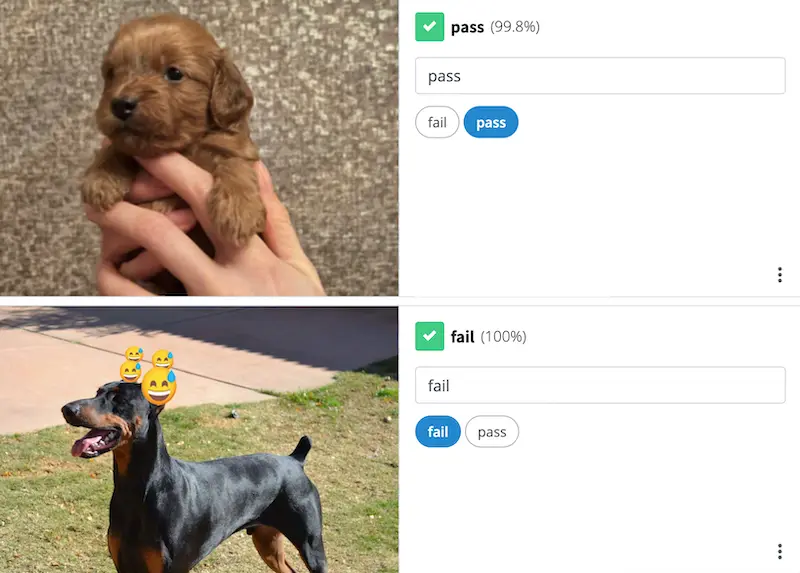
This is the whole argument for custom moderation. The obvious violations are the easy part. Your rules live in the cases a general-purpose model was never built to judge.
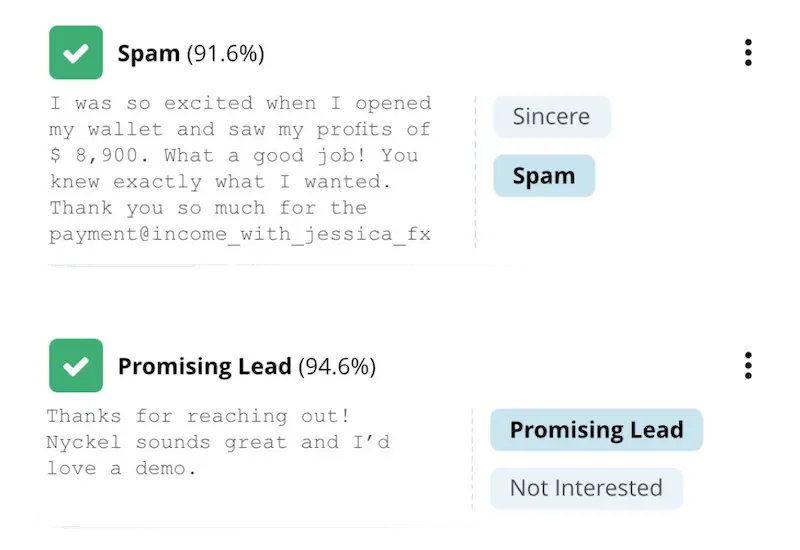
Images and text
The same thing works on what people write.
Why it's worth automating
What makes this hard by hand.
How it works
Three steps.
Show it your calls
Label a few examples the way your team would. The corrections your moderators already make every day are training data — you're not creating new work, you're capturing work that currently evaporates.
Set a confidence threshold
Auto-clear the confident approvals, auto-flag the confident violations, and send only the uncertain middle to a person. See tuning thresholds for how to pick the numbers.
Watch the queue shrink
Every reviewed item feeds the next retrain, so the band of cases needing human eyes narrows over time. Your reviewers spend their attention where it actually matters.
In production
Taimi moderates images and text on Nyckel.
A dating platform with user-generated photos and messages — the case where getting moderation wrong is most visible, in both directions.