Identify width of storage bin in inches
using AI
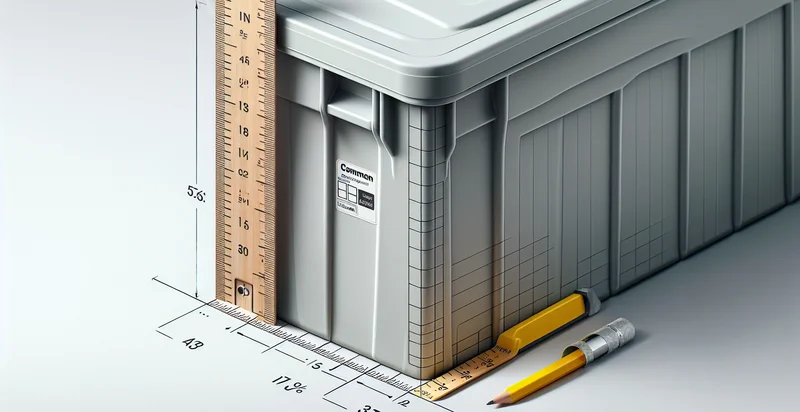
Below is a free classifier to identify width of storage bin in inches. Just upload your image, and our AI will predict the width of the storage bin in inches - in just seconds.
Create a free account to:
Get instant API credentials
Start calling the API immediately with your own keys
Track accuracy on your data
See real-time performance metrics and understand how well the model works for your specific use case
Discover better models for your data
Get recommendations for specialist models trained on your examples that are more accurate and cost-effective
How this classifier works
To start, upload your image. Our AI tool will then predict the width of the storage bin in inches.
This pretrained image model uses a Nyckel-created dataset and has 15 labels, including 1-3 Inches, 10-12 Inches, 13-15 Inches, 16-18 Inches, 19-21 Inches, 22-24 Inches, 25-27 Inches, 28-30 Inches, 31-33 Inches and 34-36 Inches.
We'll also show a confidence score (the higher the number, the more confident the AI model is around the width of the storage bin in inches).
Whether you're just curious or building width of storage bin in inches detection into your application, we hope our classifier proves helpful.
Related Classifiers

Need to identify width of storage bin in inches at scale?
Get API or Zapier access to this classifier for free. It's perfect for:
- Inventory Management System: The false image classification function can be integrated into an inventory management system to identify items stored in bins. By analyzing the width of storage bins, businesses can optimize space utilization, automate restocking processes, and reduce manual errors in inventory tracking.
- Warehousing Efficiency Analysis: This function can be utilized to assess the efficiency of warehouse layouts. By understanding the dimensions of storage bins, managers can evaluate if current storage solutions meet operational needs and make informed decisions on reconfigurations to maximize workflow.
- E-commerce Fulfillment Optimization: In e-commerce settings, accurately classifying the width of storage bins can improve the fulfillment process. It allows for better organization of products, ensuring that items are stored in appropriately sized bins, thus speeding up the order-picking process and reducing shipping costs.
- Quality Control in Manufacturing: Manufacturers can leverage this function during quality control checks to ensure that the storage entities conform to specified dimensions. This helps maintain product integrity and ensures that the setup aligns with safety standards and efficient manufacturing processes.
- Logistics and Transportation Planning: Logistics companies can use false image classification to measure the width of storage bins in transit. This data is essential for route planning and vehicle loading optimizations, ensuring that each shipment complies with weight and space restrictions to minimize transport costs.
- Sustainability Tracking: Retailers can track storage bin dimensions to analyze material usage and sustainability. By optimizing bin sizes, businesses can reduce packaging waste and make more environmentally friendly choices, potentially leading to reduced shipping volumes.
- Space Allocation in Retail Stores: Retail businesses can implement this function to assess the width of storage bins used in their operations. This classification can help in strategic merchandising decisions, allowing for improved space allocation in stores, ultimately enhancing customer shopping experiences while maximizing product displays.