Identify unloading dock configurations
using AI
Below is a free classifier to identify unloading dock configurations. Just upload your image, and our AI will predict the optimal unloading dock configuration based on the provided layout - in just seconds.

Create a free account to:
Get instant API credentials
Start calling the API immediately with your own keys
Track accuracy on your data
See real-time performance metrics and understand how well the model works for your specific use case
Discover better models for your data
Get recommendations for specialist models trained on your examples that are more accurate and cost-effective
How this classifier works
To start, upload your image. Our AI tool will then predict the optimal unloading dock configuration based on the provided layout.
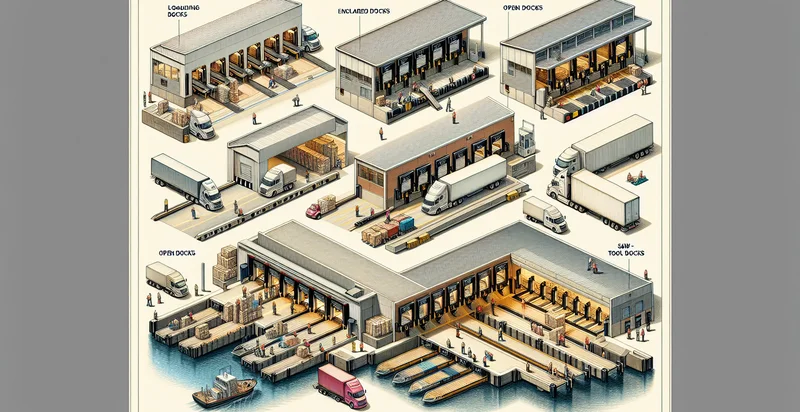
This pretrained image model uses a Nyckel-created dataset and has 10 labels, including Angled, Covered, Curved, Enclosed, Flush, Multi-Level, Offset, Open, Recessed and Straight.
We'll also show a confidence score (the higher the number, the more confident the AI model is around the optimal unloading dock configuration based on the provided layout).
Whether you're just curious or building unloading dock configurations detection into your application, we hope our classifier proves helpful.
Related Classifiers

Need to identify unloading dock configurations at scale?
Get API or Zapier access to this classifier for free. It's perfect for:
- Loading Efficiency Optimization: By identifying false image classifications of unloading dock configurations, companies can ensure that only the correct dock setups are utilized for specific trucks or containers. This can streamline the loading and unloading process, reducing wait times and increasing operational efficiency.
- Safety Compliance Verification: The function can help businesses verify that unloading dock configurations comply with safety regulations and standards. This proactive monitoring reduces the risk of accidents and injuries associated with improper configurations.
- Training and Simulation Enhancement: False image classification can be used to create realistic training scenarios for new employees in logistics or warehouse management. By exposing trainees to various incorrect configurations through simulations, they can learn to identify and correct potential issues before they occur in real situations.
- Maintenance Scheduling: Companies can use the identifier to ascertain when unloading docks are incorrectly classified through images. This insight can lead to better maintenance scheduling by addressing dock configurations that may be contributing to wear and tear over time.
- Inventory Management Accuracy: Accurate unloading dock configurations can lead to better inventory management by ensuring that products are loaded and unloaded in the correct order. Identifying false classifications helps maintain the integrity of warehouse operations and stock accuracy.
- Data-Driven Decision Making: The insights gained from analyzing false classifications can provide valuable data for logistics management. Businesses can make informed decisions about dock usage patterns and configurations based on visual analysis, maximizing resource allocation.
- Predictive Analytics for Dock Usage: By compiling data from false image classifications, predictive analytics models can be developed to forecast dock usage and traffic patterns. This enables businesses to optimize space, improve workflow, and anticipate peak operational times.