Identify length of trailer in feet
using AI
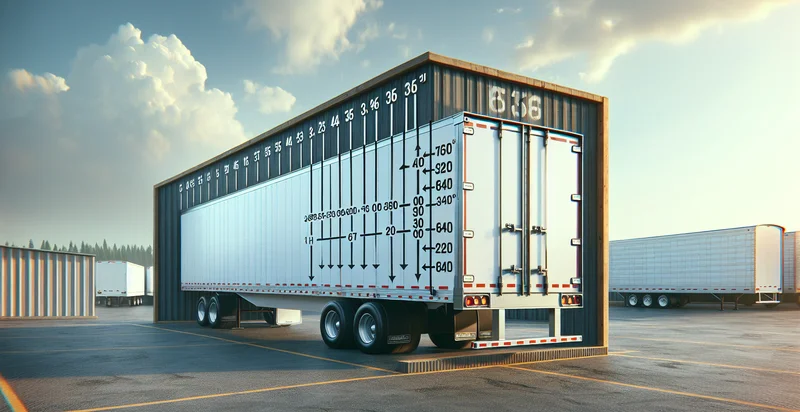
Below is a free classifier to identify length of trailer in feet. Just upload your image, and our AI will predict the length of the trailer in feet - in just seconds.
Create a free account to:
Get instant API credentials
Start calling the API immediately with your own keys
Track accuracy on your data
See real-time performance metrics and understand how well the model works for your specific use case
Discover better models for your data
Get recommendations for specialist models trained on your examples that are more accurate and cost-effective
How this classifier works
To start, upload your image. Our AI tool will then predict the length of the trailer in feet.
This pretrained image model uses a Nyckel-created dataset and has 12 labels, including 1-5 Feet, 10-15 Feet, 15-20 Feet, 20-25 Feet, 25-30 Feet, 30-35 Feet, 35-40 Feet, 40-45 Feet, 45-50 Feet and 5-10 Feet.
We'll also show a confidence score (the higher the number, the more confident the AI model is around the length of the trailer in feet).
Whether you're just curious or building length of trailer in feet detection into your application, we hope our classifier proves helpful.
Related Classifiers


Need to identify length of trailer in feet at scale?
Get API or Zapier access to this classifier for free. It's perfect for:
- Fleet Management Optimization: Utilizing the 'length of trailer in feet' identifier can enhance fleet management systems by ensuring that dispatchers accurately record trailer dimensions. This information aids in optimizing loads, reducing shipping costs, and improving overall efficiency in operations.
- Compliance with Regulations: Logistics companies can leverage the identifier to ensure compliance with state and federal regulations regarding vehicle and trailer sizes. By accurately classifying trailer lengths, companies can avoid penalties and ensure safety standards for transportation.
- Insurance Assessments: Insurance companies can employ the trailer length data for better risk assessments and premium calculations. Understanding the dimensions helps insurers to evaluate coverage needs and potential liabilities associated with different types of trailers.
- Route Planning and Safety: The identifier can facilitate safer and more efficient route planning by analyzing trailer lengths against road restrictions and bridge clearances. This can minimize incidents and improve delivery times by ensuring that routes are suitable for the vehicles on the job.
- Inventory Management: Warehouse and distribution centers can use the trailer length in feet to organize and manage their loading docks better. Accurate classification of trailer sizes allows for efficient scheduling and easier space management, leading to optimized workflows.
- Customer Reporting and Insights: Businesses can use trailer length data to provide customers with detailed insights and reporting on their shipping logistics. This transparency can enhance customer trust and satisfaction by demonstrating adherence to the specified requirements.
- Data Integration for Analytics: The 'length of trailer in feet' identifier can be integrated into broader analytics platforms to track trends and performance indicators in logistics. This data can inform strategic decision-making, leading to improvements in service offerings and operational efficiencies.