Identify if slide is rusted
using AI
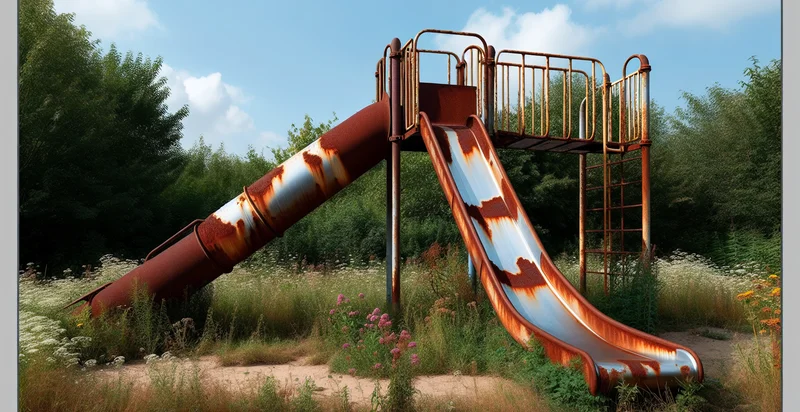
Below is a free classifier to identify if slide is rusted. Just upload your image, and our AI will predict if the slide is rusted - in just seconds.
Create a free account to:
Get instant API credentials
Start calling the API immediately with your own keys
Track accuracy on your data
See real-time performance metrics and understand how well the model works for your specific use case
Discover better models for your data
Get recommendations for specialist models trained on your examples that are more accurate and cost-effective
How this classifier works
To start, upload your image. Our AI tool will then predict if the slide is rusted.
This pretrained image model uses a Nyckel-created dataset and has 2 labels, including Not Rusted and Rusted.
We'll also show a confidence score (the higher the number, the more confident the AI model is around if the slide is rusted).
Whether you're just curious or building if slide is rusted detection into your application, we hope our classifier proves helpful.
Related Classifiers
Need to identify if slide is rusted at scale?
Get API or Zapier access to this classifier for free. It's perfect for:
- Predictive Maintenance: This use case involves leveraging the rust identification function to predict when machinery or equipment is likely to fail. By analyzing images of equipment surfaces, maintenance teams can prioritize inspections and proactively address rust issues before they lead to costly breakdowns.
- Quality Control in Manufacturing: Manufactures can integrate the rust identification feature into their quality control processes. By routinely scanning products for rust, companies can ensure that only items meeting quality standards are shipped, reducing returns and increasing customer satisfaction.
- Asset Management in Industrial Facilities: Businesses managing large fleets of vehicles or machinery can utilize rust detection to assess the condition of their assets. This information aids in making informed decisions about repairs, replacements, and budgeting for asset lifecycle management.
- Environmental Compliance Monitoring: Industries subject to environmental regulations can use rust identification to monitor their equipment's condition and compliance. By ensuring that their machinery is rust-free, organizations can mitigate the risk of leaks or contamination that could lead to regulatory fines.
- Home Inspection Services: Home inspectors can employ this function to identify rust on various surfaces of a property, such as pipes, railings, or appliances. Early detection of rust can provide valuable information to potential buyers regarding maintenance needs and affect their purchasing decisions.
- Construction and Safety Audits: In the construction industry, safety auditors can utilize rust identification to evaluate the integrity of structures and materials. Identifying rust early can prevent accidents due to structural failure and promote safer construction practices.
- Historical Preservation: Museums or conservationists can apply the rust identification technology to protect and restore historical artifacts or structures. Accurate detection of rust can guide restoration efforts, ensuring that historical integrity is maintained while preventing further decay.