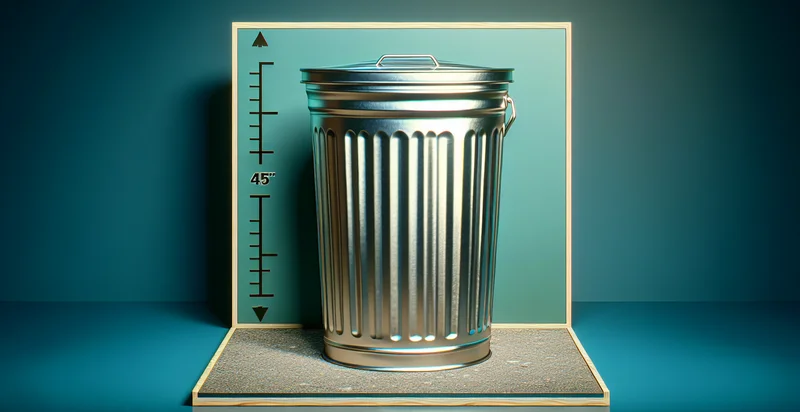
Identify height of trash can in inches
using AI
Below is a free classifier to identify height of trash can in inches. Just upload your image, and our AI will predict the height of a trash can in inches. - in just seconds.
Create a free account to:
Get instant API credentials
Start calling the API immediately with your own keys
Track accuracy on your data
See real-time performance metrics and understand how well the model works for your specific use case
Discover better models for your data
Get recommendations for specialist models trained on your examples that are more accurate and cost-effective
How this classifier works
To start, upload your image. Our AI tool will then predict the height of a trash can in inches..
This pretrained image model uses a Nyckel-created dataset and has 30 labels, including 1-3 Inches, 10-12 Inches, 13-15 Inches, 16-18 Inches, 19-21 Inches, 22-24 Inches, 25-27 Inches, 28-30 Inches, 31-33 Inches and 34-36 Inches.
We'll also show a confidence score (the higher the number, the more confident the AI model is around the height of a trash can in inches.).
Whether you're just curious or building height of trash can in inches detection into your application, we hope our classifier proves helpful.
Related Classifiers

Need to identify height of trash can in inches at scale?
Get API or Zapier access to this classifier for free. It's perfect for:
- Smart Waste Management: The false image classification function can be utilized in smart city applications to identify and classify the height of trash cans for efficient waste collection routing. By analyzing data from various locations, cities can optimize collection schedules based on trash can capacity, reducing operational costs and enhancing recycling efforts.
- Retail Store Audits: Retail chains can implement this function to monitor and evaluate their trash bins during store audits, ensuring compliance with cleanliness standards. The system can automatically assess the height of bins and flag any that do not meet company specifications, promoting a uniform store experience.
- Facility Management: Facility managers can leverage this technology to assess trash can height and placement in public spaces or office buildings, ensuring accessibility and compliance with regulations. This can help maintain aesthetics and functionality in shared environments while encouraging proper waste disposal habits.
- Environmental Research: Researchers studying waste management habits may use this function to analyze the relationship between trash can height and waste generation in various demographics. By collecting data on different urban settings, researchers can derive insights that contribute to sustainable waste management practices.
- Smart Home Integration: Home automation systems can integrate this image classification function to help residents manage their waste effectively. For instance, the system could alert owners when their trash cans are filled, based on height measurements, and notify them when it's time for collection.
- Public Health Monitoring: Public health officials can use this technology to ensure that public trash bins maintain proper height and volume attributes, promoting sanitation in communities. Analyzing the data can help identify under-served areas where trash receptacles may be insufficient, reducing litter and associated health risks.
- Event Management: Event organizers can employ this classification function to assess trash can availability and adequacy in event spaces. This can aid in planning the placement and quantity of bins to ensure a clean environment throughout the event, thereby enhancing attendee experience and reducing waste overflow.