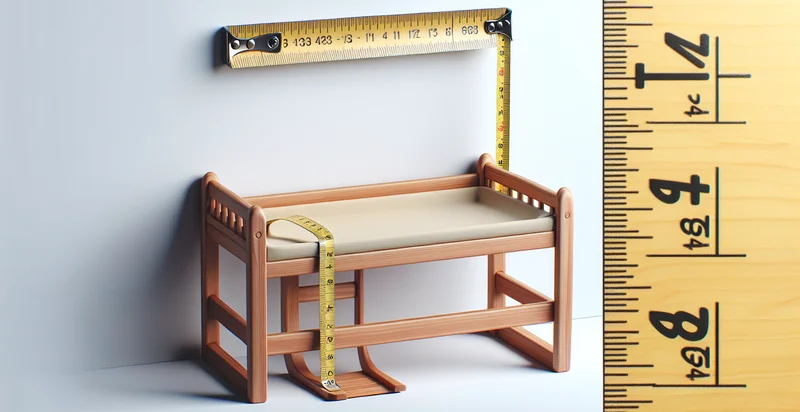
Identify height of changing table in inches
using AI
Below is a free classifier to identify height of changing table in inches. Just upload your image, and our AI will predict the height of a changing table in inches - in just seconds.
Create a free account to:
Get instant API credentials
Start calling the API immediately with your own keys
Track accuracy on your data
See real-time performance metrics and understand how well the model works for your specific use case
Discover better models for your data
Get recommendations for specialist models trained on your examples that are more accurate and cost-effective
How this classifier works
To start, upload your image. Our AI tool will then predict the height of a changing table in inches.
This pretrained image model uses a Nyckel-created dataset and has 20 labels, including 1-3 Inches, 10-12 Inches, 13-15 Inches, 16-18 Inches, 19-21 Inches, 22-24 Inches, 25-27 Inches, 28-30 Inches, 31-33 Inches and 34-36 Inches.
We'll also show a confidence score (the higher the number, the more confident the AI model is around the height of a changing table in inches).
Whether you're just curious or building height of changing table in inches detection into your application, we hope our classifier proves helpful.
Related Classifiers

Need to identify height of changing table in inches at scale?
Get API or Zapier access to this classifier for free. It's perfect for:
- Childcare Equipment Safety Compliance: Organizations that manufacture changing tables can use the 'height of changing table in inches' identifier to ensure that their products meet safety regulations. By classifying tables based on height, manufacturers can determine which designs may pose a risk to caregivers and infants.
- Customizable Furniture Solutions: Retailers offering customizable changing tables can use this classification function to recommend appropriate height options based on customer needs. This ensures that customers receive aesthetically pleasing, yet functional products that cater to their specific ergonomic requirements.
- Market Research & Trends Analysis: Researchers can apply the height classification to analyze trends in changing table design preferences across different regions or demographics. This valuable data enables manufacturers to align their products with consumer preferences, enhancing sales potential.
- E-commerce Optimization: Online retailers can use the height identifier in their product listings to enhance searchability. By categorizing tables based on height, they can improve user experience, allowing customers to find suitable products more efficiently based on their height preferences.
- Post-Purchase Ergonomic Assessment: Parent support services can utilize this function to advise clients on the ergonomic suitability of their changing tables after purchase. Offering guidance on table height can help ensure caregiver comfort, reducing strain during use.
- Product Recall Management: In the event of safety concerns related to height, manufacturers can utilize this classification function to quickly identify and recall specific models. By segmenting changing tables by height, they can streamline the recall process to include only potentially dangerous products.
- Educational Workshops for New Parents: Childcare educators can implement the height identifier in workshops teaching new parents about safe changing practices. By showcasing the importance of selecting the right height table, they can promote better caregiver ergonomics and enhance safety for infants during changing routines.