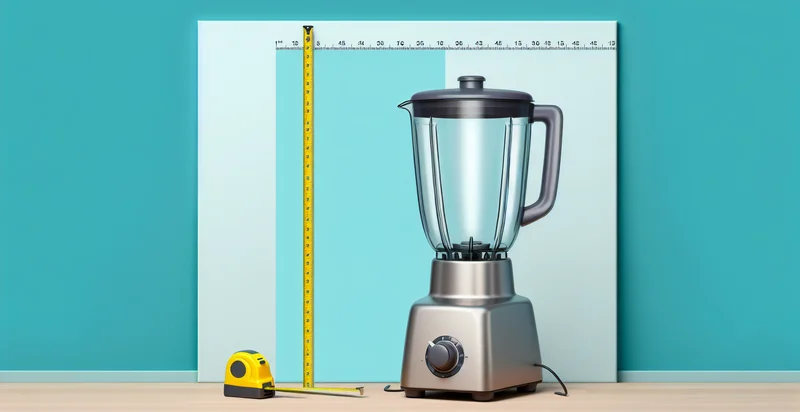
Identify height of blender in inches
using AI
Below is a free classifier to identify height of blender in inches. Just upload your image, and our AI will predict the height of the blender in inches - in just seconds.
Create a free account to:
Get instant API credentials
Start calling the API immediately with your own keys
Track accuracy on your data
See real-time performance metrics and understand how well the model works for your specific use case
Discover better models for your data
Get recommendations for specialist models trained on your examples that are more accurate and cost-effective
How this classifier works
To start, upload your image. Our AI tool will then predict the height of the blender in inches.
This pretrained image model uses a Nyckel-created dataset and has 12 labels, including 1-3 Inches, 10-12 Inches, 13-15 Inches, 16-18 Inches, 19-21 Inches, 22-24 Inches, 25-27 Inches, 28-30 Inches, 30+ Inches and 4-6 Inches.
We'll also show a confidence score (the higher the number, the more confident the AI model is around the height of the blender in inches).
Whether you're just curious or building height of blender in inches detection into your application, we hope our classifier proves helpful.
Related Classifiers
Need to identify height of blender in inches at scale?
Get API or Zapier access to this classifier for free. It's perfect for:
- Product Compliance Verification: This use case involves using the height of a blender to ensure compliance with industry standards and regulations. Companies can verify that their products meet specified dimensions for safety and efficiency, improving regulatory adherence.
- Inventory Management Optimization: Retailers can utilize the height classification to streamline inventory storage and display strategies. By understanding the size of blenders, businesses can optimize shelf space in stores and warehouses, enhancing accessibility and organization.
- Comparative Advertising: Brands can leverage the height metric in advertising campaigns to position their blenders against competitors. Knowing the height of their product helps in crafting targeted marketing messages highlighting convenience and fitting in limited kitchen spaces.
- E-commerce Listing Enhancements: Online sellers can enhance product listings by including accurate height measurements of blenders. This information assists customers in making informed decisions, reducing returns and dissatisfaction due to size misalignments.
- Design and Ergonomics Research: Product designers can use height data to study consumer preferences regarding kitchen appliance ergonomics. Understanding the average height of blenders helps in creating designs that are more user-friendly and suitable for various kitchen configurations.
- Consumer Education: Companies can create educational materials that inform consumers about the importance of blender height in relation to functionality and use-case context. This can be beneficial in helping potential buyers choose the right product for their culinary needs.
- Market Analysis and Trends: Analysts can track and analyze the height of blenders across different brands to identify market trends. By correlating height data with consumer preferences, companies can make strategic decisions regarding product development and innovation.